Orthodontic glossary

The world of orthodontics is full of unusual words and terminology. At Braces N Faces Orthodontics in Geelong and Hoppers Crossing, we use these words every day so we're familiar with what they mean. However, for those who require braces for their teeth, they might wonder about some of the words we use. For that reason we've provided a list of words and expressions you might come across during a session with one of our orthodontists.
ortho-glossary-hero

Explaining orthodontic terms

The list below is from our own resources and from The Australian Schedule of Dental Services and Glossary. While it won't answer all your questions, it may help provide a little clarification.

Importantly, if you have questions about your braces, don't hesitate to ask. At Braces N Faces Orthodontics we've been fitting braces for patients in Geelong for many years and have extensive experience and knowledge of what it takes to achieve straight teeth and a beautiful smile for our patients.
sbs-img-1

Tooth terminology

At an adjustment appointment, our orthodontists at Braces N Faces assess how your treatment is progressing, change or adjust your wires, or add elastics to ensure your treatment progresses the way we want it to.

This is a congenital condition in which all the teeth are absent.

A word to describe teeth situated in the front and which orthodontists commonly use for the incisor and canine teeth.

In orthodontics, appliances are the devices we use to move your teeth, realign your jaw or keep your teeth in their final position once we remove the braces.

This is a word to describe the arrangement of your teeth. You have an upper dental arch and a lower dental arch.

The metal wire attached to the brackets on your teeth is known as the archwire and is what moves your teeth into their new position.

ASO is an acronym for The Australian Society of Orthodontists, the professional group for orthodontists in Australia. Orthodontists must be certified before they can be a member of the Australian Society of Orthodontists.

This is the word to describe wear that takes place on your teeth's biting surfaces.

A circular strip of metal cemented to teeth is known as a band, and provides an anchor point as well as strength.

When you visit Braces N Faces Orthodontics we’ll bond braces or bands to your teeth in a process known as banding.

This is how we describe the way your top and bottom teeth come into contact.

We make an imprint of the manner in which your teeth contact each other and this is your bite registration.

The word to describe the process of adhering brackets to your teeth.

The archwire of your braces sits on a bracket made from either metal or ceramic and bonded to your teeth.

People who grind their teeth, usually while asleep, suffer from bruxism. This can lead to pain in the jaw and also abnormal wear to your teeth.

This is a small metal part of a bracket which orthodontists attach to the molar band to hold appliances to help move your teeth.

The calcified tissue which is on the surface of the root of a tooth and which provides attachment for the periodontal ligament.

A cephalometric radiograph is a special x-ray of your face which we use to examine the position of your teeth and jaws.

Archwires are held into brackets using a flexible plastic chain that helps move your teeth.

A cross bite occurs when the top, or upper, teeth bite inside the bottom, lower, teeth. A cross bite is also known as a malocclusion.

The crown of the tooth is the part of the tooth that is visible and is above the gum margin or gingiva.

Crowding occurs when there is not enough space for your teeth in your mouth, and your teeth start overlapping each other.

Debanding occurs when our orthodontists remove your braces.

The calcified tissue that forms the major part of a tooth. In the crown of the tooth, the dentine is covered by enamel. The pulp chamber of the tooth is enclosed by dentine.

Diastema is the word that describes the gap between two teeth. If you have a gap between your front teeth you have a diastema.

If you have ectopic teeth you have teeth that have developed in the wrong place. The good news is that braces can usually move ectopic teeth into the right position.

As the name suggests, these are tiny elastics or rubber bands which apply continual force so your teeth or jaw move into correct alignment.

The hard, calcified substance that is the surface of a crown of a tooth.

Fixed appliances are devices we bond to your teeth to help their realignment. Only your orthodontist can remove these appliances, hence the name “fixed appliances”.

Fluoride is a natural element, often added to water supplies, to help prevent tooth decay. Most toothpastes contain fluoride.

Surgery to cut or move the fraenum or frenum into a new position is known as a frenectomy.

The fraenum, also known as frenum, is the fold of flesh between your gums and cheeks or your tongue.

Functional appliances are removable devices which can help correct misaligned upper and lower jaws.

The marginal part of the gum that surrounds the tooth where it emerges from the deeper, supporting tissues.

An impacted tooth is one that has not fully erupted through your gum.

When we take a mould of your teeth we are taking an impression.

If you have teeth that do not meet and fit together neatly then you have a malocclusion. There are different classes of malocclusions.

Your mandible is your lower jaw.

Your maxilla is your upper jaw.

Mixed dentition is the phrase used when children, usually aged between 6 and 12, have a combination of deciduous or baby teeth and permanent adult teeth.

Modules are small plastic pieces which hold archwires in brackets. They are donut-shaped.

The name given to the lining of epithelium inside the mouth, and its immediate substructures.

A night guard is a type of removable mouthguard which users wear at night to reduce damage or wear to teeth from jaw clenching or teeth grinding during sleep.

An open bite occurs when teeth do not contact each other.

This is the specialised field of dentistry involving the diagnosis, supervision, guidance and correction of malocclusions.

An orthodontist is a specialist who diagnoses, prevents and repairs dental and facial irregularities. In Australia, to become an orthodontist you must complete a Bachelor degree in Dentistry, a Masters degree in Orthodontics and be registered as a Specialist in Orthodontics.

This is a type of jaw surgery to repair facial bone structure abnormalities.

An overbite occurs when your top front teeth extend beyond your bottom front teeth. Many people have a slight overbite; a more severe overbite may lead to tooth decay, gum disease or jaw pain. It is sometimes referred to as buck teeth.

An overjet (often referred to as "buck teeth") is when the upper front teeth protrude outward. Whereas an overbite is marked by an excessive vertical distance between the front upper and lower teeth, an overjet has a greater horizontal difference between the two sets.

This is a type of x-ray which displays all teeth and both jaws on one film.

The ligament which connects a tooth by its root to the supporting bone.

Plaque is a film of bacteria on your teeth. Combined with sugars, plaque becomes an acid that causes tooth decay and gum disease.

This impressively named appliance helps correct a crossbite. It attaches to molar teeth and has a zig- zag wire across the palate.

If you have an orthodontic appliance you can take out when you please, then you have a removable appliance.

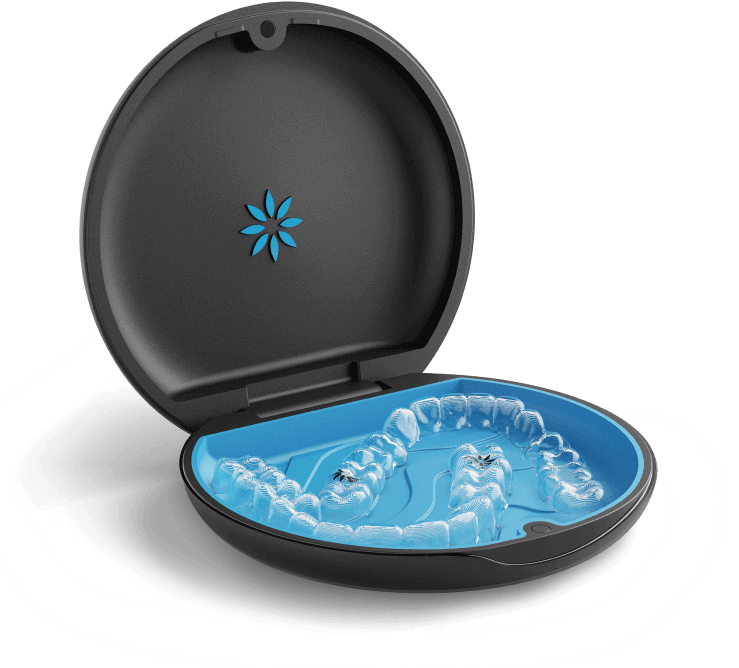
When your braces come off, you will get a new appliance to stop your teeth moving again. This appliance is called a retainer.

Separators are flexible o-rings that create space between teeth. Orthodontists usually place them in the days leading up to a band being bonded to a tooth.

The root is the part of the tooth below the gum margin and is connected through cementum on its surface and the fibres of the periodontal ligament to the supporting bone.

This is where you have more teeth than usual. Supernumerary teeth are usually a genetic occurrence.

This is an appliance comprising both an upper and lower plate and pulls the lower jaw forward, encouraging growth of the lower jaw.

Wires is another name for archwires, the fine metal wires attached to brackets and used to move teeth into the correct alignment.

Dental arch

The teeth in the upper or lower arch usually comprising the central and lateral incisors and the canine (or cuspid) teeth.

An adjective to describe the aspect or surface of the teeth or other object or structure in the mouth which is in proximity to the cheek.

The tooth usually immediately behind the incisor teeth; usually the third tooth from the centre of the dental arch.

The front teeth are usually in the centre of the upper or lower dental arch.

An adjective to describe the aspect or surface of teeth or other object or structure in the mouth which is in proximity to the lips; for instance, the front surface of the incisor teeth.

An adjective to describe the aspect or surface of the teeth or other object or structure in the mouth which is in proximity to the tongue.

The teeth behind the bicuspid teeth. There are three molar teeth in each quadrant of the dental arch. They are the very back teeth; the wisdom tooth is the last molar in each dental arch.

An adjective to describe the aspect or surface of the teeth or other object or structure in the mouth which is adjacent to the palate.

The teeth at the back of the mouth including premolars and molars.

Removable appliances

A removable, one arch appliance attached to the dentition by metal clasps or similar device designed to maintain the position of the teeth in the dentition. The appliance does not provide pressure directed at tooth movement. Sometimes used following orthodontic active treatment to maintain a correction.

A removable, one arch appliance attached to the dentition by clasps or similar device which contains some elements capable of exerting pressure on either individual teeth or parts of the arch to achieve tooth or dental arch movement.

An appliance whose primary action involves orthopaedic change of jaw shape or relationship utilising and modifying the effect of the environmental tissues. Many are bi-maxillary appliances involving upper and lower arches.

A series of custom-made plastic aligners used to gradually move teeth.

Fixed appliances

Application of bands and/or brackets to six teeth or fewer in the maxillary or mandibular arch, which can be attached to a resilient arch wire. The appliance is designed to correct either tooth position or arch form.

Application of bands and brackets for attachment of resilient arch wires to most of the teeth of the maxillary or mandibular arch to correct the position of teeth or to correct the arch form. This procedure includes the removal of the appliance and the provision and supervision of the initially provided fixed or removable retention appliance.

Insertion of an appliance, fixed to the palatal or lingual aspect of the dentition by bands, frequently applied in the molar region. It is aimed at either changing or maintaining the arch form and can also be designed to uncross or straighten individual teeth.

A series of custom-made plastic aligners used to gradually move teeth.

Follow Us!

Get social with Braces N Faces Orthodontics
insta-01
insta-02insta-03insta-06insta-07
insta-04insta-05insta-08insta-09

Book your free consultation with Braces N Faces Orthodontics today

For further information about how we use your data, please see our privacy policy
footer-book-form